The Short Answer
The main signs of a slab leak are a warm or hot spot on the floor, the sound of running water when nothing is on, a water meter that moves with all fixtures off, an unexplained rise in the water bill, damp or warped flooring, mold at floor level, new cracks in floors or walls, low water pressure, and a water heater that runs constantly. A meter test is the quickest way to confirm a leak.
What Is a Slab Leak?
A slab leak is a leak in a water or drain pipe that runs beneath or within a home's concrete foundation slab. Many homes built on slabs have supply lines laid in the soil under the concrete. When one of those pipes leaks, water escapes under the house where it cannot be seen, which is why the warning signs are indirect. Repair options are explained on our slab leak repair page.
The 9 Warning Signs of a Slab Leak
The signs below are listed from the most specific to the most general. Several together make a slab leak much more likely.
| Sign | What it suggests |
|---|---|
| Warm or hot spot on the floor | A hot-water line leaking beneath that area |
| Sound of running water with everything off | Water escaping under pressure |
| Water meter moves with all fixtures off | A leak somewhere on the supply side |
| Unexplained rise in the water bill | Water is being lost continuously |
| Damp carpet or warped, cupping wood floors | Moisture rising through the slab |
| Mold or mildew at floor level | Ongoing moisture along baseboards |
| New cracks in floors, tile or walls | Soil movement under the slab |
| Low water pressure | Water escaping before it reaches fixtures |
| Water heater running constantly | It keeps reheating water lost from a hot line |
How Can I Test for a Slab Leak at Home?
A simple meter test confirms whether there is a supply leak, which is the first step before anyone looks for a slab leak specifically.
- 1
Turn off every tap, toilet, appliance and irrigation system.
- 2
Find the water meter, usually in a box near the street.
- 3
Note the reading and the leak indicator, a small triangle or dial that spins with any flow.
- 4
Wait 30 to 60 minutes without using water.
- 5
Check again. Any movement means water is flowing somewhere.
- 6
Turn off the water heater's cold supply and watch the meter. If it stops, the leak is on the hot side, which is common with slab leaks.
Rule out a running toilet first, because it is a far more common cause of meter movement; see why a toilet keeps running.
How Do Professionals Confirm a Slab Leak?
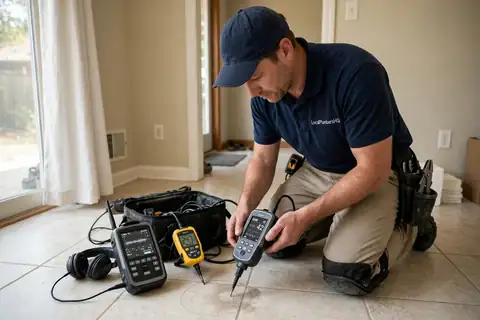
A technician confirms and pinpoints a slab leak with specialist equipment rather than guesswork. Pressure testing isolates which line is leaking, an electronic locator maps where the pipe runs under the slab, and acoustic microphones and thermal cameras narrow the leak to a small area. Only then is any concrete opened, or the line rerouted. These methods are explained on our leak detection page.
What Should I Do If I Think I Have a Slab Leak?
Act promptly, because water under a slab can damage flooring and affect the soil supporting the foundation.
- 1
Do the meter test to confirm a leak.
- 2
If the leak is on the hot side, turn off the cold supply to the water heater to stop it while keeping cold water available.
- 3
If water is flooding the floor, shut off the main water valve.
- 4
Photograph any damage for insurance.
- 5
Call a plumber for leak detection and repair options.
Is a Slab Leak an Emergency?
A slab leak is an emergency when water is visibly flooding floors, when a hot-water line is leaking heavily, or when water is near electrical outlets. Shut off the water and call for urgent help. A slow leak found by a meter test is still urgent, because it wastes water and can undermine the foundation, but it can usually be scheduled within days.
How Are Slab Leaks Repaired?
Slab leaks are repaired in one of three ways: a direct repair through a small opening in the slab, a reroute that abandons the leaking line and runs new pipe through the walls or attic, or a whole-house repipe when the buried pipe is failing throughout. Older homes with repeated slab leaks often benefit from moving the supply lines out of the slab entirely; see whole-house repiping and our guide comparing PEX vs copper pipe.
Related Problems
A sudden drop in water pressure can also point to a slab leak, as explained in causes of low water pressure.
Slab Leak FAQs
What causes slab leaks?
Common causes are corrosion of copper pipe, abrasion against concrete or gravel as pipes expand and contract, poor installation, shifting soil, and high water pressure.
Can I have a slab leak without a warm floor?
Yes. A warm spot only appears when a hot-water line leaks. Cold-water and drain line leaks under the slab show other signs, such as meter movement, damp flooring or cracks.
Does homeowners insurance cover slab leaks?
Many policies cover the cost of accessing the leak and resulting water damage, but not always the pipe repair itself. Check your policy.
How long can a slab leak go unnoticed?
A slow slab leak can go unnoticed for months, especially on a cold-water line. Checking the water meter a couple of times a year catches hidden leaks early.