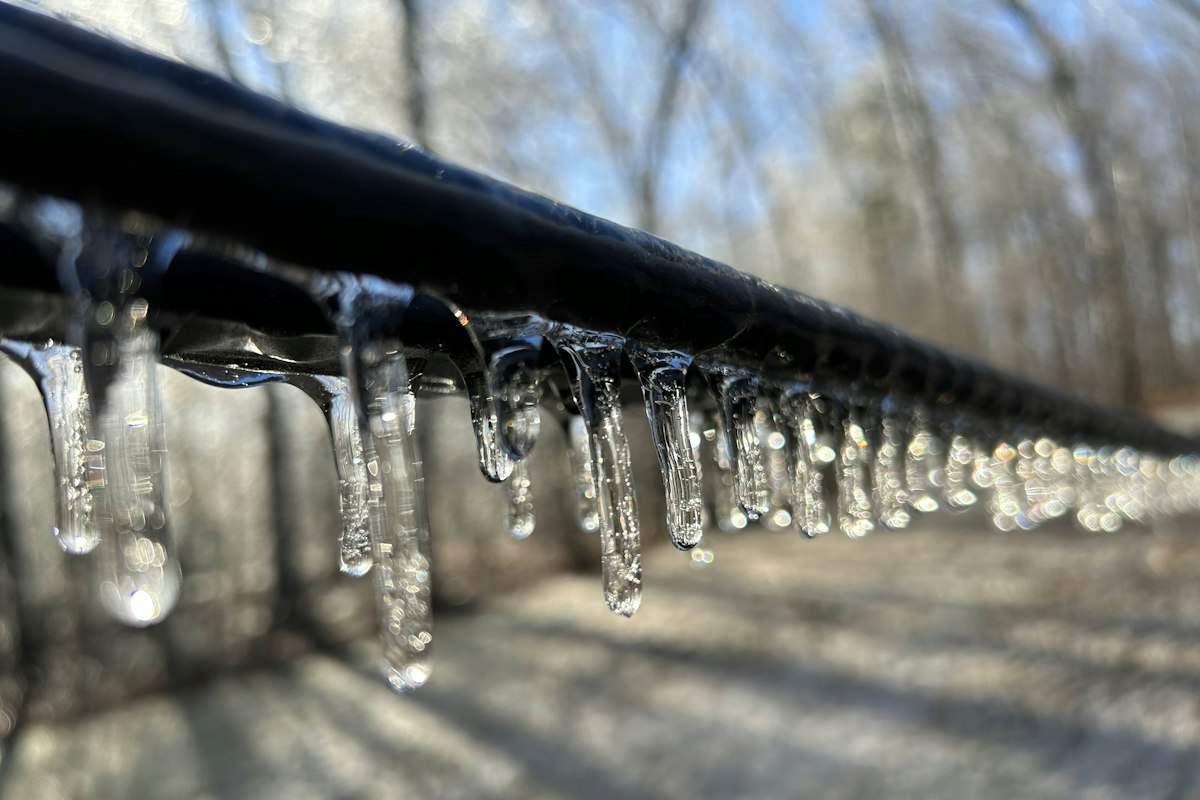
What Is Frozen Pipe Repair?
Frozen pipe repair is the safe thawing of a water pipe that has frozen solid, followed by the repair of any pipe that split while frozen. When water freezes it expands by about 9 percent. Inside a closed pipe, that expansion builds pressure between the ice blockage and the closed faucet downstream, and the pressure can split copper, PEX, CPVC or galvanized steel pipe. The split often stays hidden until the ice melts. Then water pours out of the crack, sometimes inside a wall, ceiling or crawl space.
A plumber thaws a frozen pipe with controlled heat, finds and repairs any splits, and recommends changes so the same pipe does not freeze again. Frozen pipes are most common in homes where pipes run through unheated spaces, along exterior walls or in places exposed to cold drafts.
A burst pipe that is already flowing is an emergency. Shut off the main water valve first, then call our 24-hour emergency plumbing line.
Signs Your Pipes Are Frozen
Frozen pipes show a handful of clear signs during cold weather. The signs below appear before a pipe bursts.
- No water or a trickle from a faucet: ice is blocking the line feeding that faucet.
- Frost on exposed pipes: visible frost on pipes in a basement, crawl space or garage.
- A toilet that will not refill: the supply line to the toilet is frozen.
- Unusual odors from drains: a frozen drain or vent can push smells back into the home.
- Bulging pipe: a visible swelling or bulge in a section of pipe.
- Cold spots in walls: exterior walls that feel very cold where pipes run.
If only one faucet is affected, the frozen section is in the line feeding that fixture. If the whole house has no water, the freeze may be in the main line where it enters the home or in the service line itself.
Which Pipes Freeze Most Often?
Some pipes are far more likely to freeze than others. The table below lists the usual locations and why they are at risk.
| Location | Why it freezes |
|---|---|
| Crawl spaces | Unheated air and cold drafts reach the pipes directly |
| Exterior walls | Thin or missing insulation between the pipe and the outside |
| Attics | Unheated space, especially in homes with attic plumbing |
| Garages | Unheated, often with exterior doors open in winter |
| Kitchen and bathroom sinks on exterior walls | Cabinets trap pipes away from room heat |
| Outdoor hose bibs | Directly exposed to outside air |
| Irrigation and pool lines | Shallow and exposed |
| Main line where it enters the house | Can freeze where it passes through cold soil or a foundation wall |
Homes in milder climates can be more vulnerable during a rare hard freeze, because pipes there are often run through attics, exterior walls and unheated spaces with little insulation.
How a Plumber Thaws Frozen Pipes Safely
Thawing must be done carefully, both to protect the pipe and to avoid fire. Plumbers follow six steps.
- 1
Shut off the water: the main or local valve is closed so that water cannot flood out when the ice melts at a split.
- 2
Open the faucet: opening the affected faucet lets melting water and steam escape and relieves pressure.
- 3
Find the frozen section: the plumber traces the line from the faucet back toward the supply, feeling for the coldest point and looking for frost.
- 4
Apply controlled heat: heat cables, heat guns on low settings, infrared heaters or warm towels thaw the pipe from the faucet end back toward the ice.
- 5
Check for splits: as the pipe thaws, the plumber slowly restores water and inspects the full length for leaks.
- 6
Repair and protect: split sections are cut out and replaced, and the pipe is insulated or rerouted to prevent a repeat.
Never use an open flame, such as a propane torch, to thaw a pipe. Open flames can ignite framing and insulation, and overheating a pipe can damage it or cause steam pressure to burst it.
What to Do if a Pipe Bursts
A burst pipe can release a large amount of water quickly. Act in the order below.
- 1
Shut off the main water valve: this stops the flow everywhere in the home.
- 2
Turn off electricity to any area where water is near outlets, fixtures or appliances.
- 3
Open faucets: drain remaining water from the system to reduce pressure and flooding.
- 4
Turn off the water heater: switch off gas or power if the house water supply is off for long.
- 5
Remove water: mop, wet-vacuum and move belongings out of the wet area.
- 6
Document the damage: take photos for insurance before cleanup.
- 7
Call a plumber: describe where the water is coming from and what you have shut off.
Know where your main shut-off valve is before winter arrives. Our shut-off valve replacement page explains how to find it and what to do if it will not turn.
Frozen Pipe Repair Methods
The repair depends on the damage. The table below lists the usual options.
| Damage | Usual repair |
|---|---|
| Frozen but intact | Thaw, insulate and protect |
| Small split in a straight pipe | Cut out and replace the split section |
| Split fitting | Replace the fitting |
| Several splits in one run | Replace the whole run, often with PEX |
| Burst hose bib | Replace with a frost-free sillcock |
| Frozen main line | Thaw from the house end; replace a damaged section if needed |
| Repeated freezing in the same wall | Reroute the pipe to an interior wall or warm space |
PEX pipe is often used for replacement in freeze-prone areas because it expands more than rigid pipe before it fails. It is not freeze-proof, but it tolerates freezing far better than copper.
What Affects the Cost of Frozen Pipe Repair?
The factors below set the price.
| Factor | Effect on cost |
|---|---|
| Thaw only or thaw and repair | Repairing splits adds labor and materials |
| Location of the pipe | Pipes in walls, ceilings or tight crawl spaces take longer |
| Number of splits | More damage means more repair work |
| Access and restoration | Opening and patching drywall adds cost |
| Prevention work | Insulation, heat cable or rerouting adds cost |
| Timing | Freezes create demand spikes, and emergency calls may cost more |
Water damage cleanup is usually separate from the plumbing repair.
How Long Does It Take to Thaw and Repair a Pipe?
Thawing an accessible frozen pipe usually takes 30 minutes to an hour. Repairing a split in an exposed pipe takes about an hour. Repairs inside walls or ceilings take longer because of access. During a regional freeze, plumbers receive many calls at once, so response times can be longer than usual.
How to Prevent Frozen Pipes
Most frozen pipes can be prevented with preparation before cold weather. The steps below cover the main risks.
- Keep the heat on: set the thermostat to at least 55°F, even when away from home.
- Open cabinet doors: let warm room air reach pipes under sinks on exterior walls.
- Let faucets drip: a slow drip during extreme cold keeps water moving and relieves pressure.
- Insulate exposed pipes: use foam pipe sleeves in crawl spaces, garages and attics.
- Seal drafts: close foundation vents in winter where appropriate, and seal gaps where pipes pass through walls.
- Disconnect hoses: remove garden hoses and shut off and drain outdoor faucets.
- Install frost-free sillcocks: these outdoor faucets shut off the water inside the warm part of the wall.
- Use heat cable: electric heat cable rated for pipes can protect vulnerable runs.
- Drain the system if away: for long winter absences, shut off the main and drain the lines.
Preparing Your Home Before Winter
A short pre-winter checklist saves expensive repairs. Walk through the home in the fall and do the following.
- 1
Find and test the main shut-off valve so it turns easily in an emergency.
- 2
Check crawl space and garage pipes for missing insulation.
- 3
Shut off and drain outdoor faucets and irrigation lines.
- 4
Note which sinks sit on exterior walls so you know which cabinets to open in a cold snap.
- 5
Check the water heater location if it sits in a garage or unheated space.
- 6
Ask a plumber about rerouting any pipe that has frozen before.
A plumbing inspection can include a freeze-risk review of exposed pipes and shut-off valves.
What to Expect From a Frozen Pipe Visit
A plumber arriving for a frozen pipe confirms the water is shut off, then locates and thaws the frozen section. Expect the plumber to need access to crawl spaces, basements, attics or the space under sinks. Once water flows again, the plumber watches the full length of the pipe for leaks, because a split may only appear as pressure returns. If walls or ceilings must be opened to reach a split, the plumber makes the smallest opening needed. Drywall patching and painting usually happen after the area has dried.
Frozen Drain and Vent Pipes
Supply pipes are not the only pipes that freeze. Drain lines that run through unheated spaces can freeze where water sits in a trap or a low spot, and plumbing vents on the roof can close up with frost and ice in extreme cold. A frozen drain shows up as a fixture that will not drain during a cold snap, even though it drained normally before. A frozen or iced vent causes gurgling, slow drains and sewer smells indoors, because the drain system cannot draw air.
Drains are thawed with gentle heat at the frozen section or with warm water run slowly from the fixture, never with chemicals. Vents usually clear as temperatures rise. Drain lines that freeze repeatedly should be insulated or rerouted, and outdoor condensate and sump discharge lines should slope so they empty completely.
Protecting a Vacant or Vacation Home
Vacant homes are at the highest risk of frozen and burst pipes, because nobody is there to notice a problem early. Before leaving a home empty in winter, keep the heat at 55°F or higher, open cabinet doors on exterior walls, and shut off the main water valve. For long absences, drain the system by opening faucets at the lowest and highest points of the house. A smart thermostat that alerts you to temperature drops, and leak sensors with alerts, give early warning if the heat fails.
Questions to Ask Your Plumber
- 1
Did the pipe split, and where? Ask to see the damaged section.
- 2
Why did this pipe freeze? The answer shows what needs to change.
- 3
Should this pipe be rerouted or insulated? Prevention avoids a repeat next winter.
- 4
Are other pipes at risk? Ask the plumber to check nearby exposed lines.
- 5
Should I install frost-free faucets? They prevent a common winter failure.
Frozen Pipe FAQs
Will a frozen pipe always burst?
No, but the risk is high. A pipe bursts when pressure between the ice and a closed faucet exceeds the pipe's strength. Thawing quickly and opening the faucet reduces the risk.
Can I thaw a frozen pipe myself?
You can thaw an accessible, exposed pipe with a hair dryer or warm towels after opening the faucet. Never use an open flame, and call a plumber if the pipe is inside a wall or you cannot find the frozen section.
Does homeowners insurance cover burst pipes?
Many policies cover sudden water damage from a burst pipe, but may deny claims where the home was left unheated or not maintained. Check your policy.
Should I leave faucets dripping in cold weather?
Yes. A slow drip from faucets on exterior walls keeps water moving and relieves pressure, which reduces the chance of freezing and bursting.
How cold does it have to be for pipes to freeze?
Pipes in unheated or exposed areas are at risk when outdoor temperatures drop below about 20°F, especially for several hours. Wind and drafts raise the risk.
Related Plumbing Services
Frozen pipes connect to several services. A burst pipe is handled by our 24-hour emergency plumbing line and repaired through plumbing leak repair. Knowing your shut-off valves matters most in a freeze, covered under shut-off valve replacement. Homes where pipes freeze repeatedly can benefit from rerouting during whole-house repiping.