What Is Shower and Bathtub Repair?
Shower and bathtub repair is the fixing, replacement and installation of the plumbing in showers and tubs: the valve that controls water flow and temperature, the showerhead and tub spout, the drain and overflow, the shower pan, and the pipes behind the wall. It also includes upgrades such as replacing an old valve with an anti-scald valve, converting a tub to a shower, and installing new tubs and shower systems.
The shower valve is the heart of the system. It sits inside the wall behind the handle and mixes hot and cold water. When its cartridge or washers wear, the shower drips, temperature swings, or the handle becomes stiff. Most valve repairs are done from the front, through the handle opening, without opening the wall.
Leaks around showers and tubs deserve quick attention. Water from a failed valve, drain, pan or grout line can run into the wall or the floor below, damaging framing and ceilings long before it shows.
Signs Your Shower or Tub Needs Repair
- Dripping showerhead or tub spout: water drips with the handle off.
- Temperature swings: the water turns hot or cold when someone flushes or runs another tap.
- Weak spray: low flow from the showerhead.
- Hard-to-turn handle: stiff, loose or not stopping at off.
- Water stops between tub and shower poorly: the diverter sends water to both the spout and the showerhead.
- Slow drain: water pools around your feet.
- Stains on the ceiling below: a leak from the valve, drain, pan or tile.
- Loose or cracked tile, missing grout or caulk: gaps let water into the wall.
- Mold that keeps returning: often a sign of moisture behind the surface.
Common Problems and Their Fixes
| Problem | Usual cause | Typical repair | |
|---|---|---|---|
| Dripping showerhead | Worn cartridge or washers in the valve | Replace the cartridge or rebuild the valve | |
| Temperature swings | No pressure balancing, or a worn balancing cartridge | Replace the cartridge or install an anti-scald valve | |
| Scalding water | Valve limit stop set too high, water heater too hot | Adjust the limit stop; lower the heater setting | |
| Weak spray | Mineral buildup in the showerhead or a flow restrictor | Clean or replace the showerhead | |
| Diverter not working | Worn diverter gate in the tub spout or valve | Replace the tub spout or diverter | |
| Slow drain | Hair and soap buildup | Clean the drain; see [[clogged-drains | clogged drain repair]] |
| Leak through the ceiling | Valve, drain, overflow, shower pan or grout failure | Find the source, then repair the part or pan | |
| Loose tub spout | Failed set screw or threads | Reset or replace the spout |
Types of Shower Valves
Shower valves control how temperature is managed. The table below compares them.
| Valve type | How it works | Benefits |
|---|---|---|
| Two- or three-handle compression | Separate hot and cold handles | Simple; common in older homes |
| Single-handle pressure-balancing | Balances hot and cold pressure to keep temperature steady | Prevents sudden scalding or cold shocks |
| Thermostatic | Holds a set temperature and controls volume separately | Very steady temperature; more precise control |
| Diverter valve | Switches water between tub spout, showerhead or body sprays | Needed in combination systems |
Pressure-balancing and thermostatic valves are designed to protect against sudden temperature changes, which is especially important for children and older adults. Plumbing codes in many areas require anti-scald protection when a shower valve is replaced.
How a Plumber Repairs a Shower Valve
- 1
Shut off the water: at the valve's built-in stops or at the main valve.
- 2
Remove the handle and trim: to expose the valve body.
- 3
Identify the valve: brand and model decide the replacement parts.
- 4
Replace the cartridge or rebuild the valve: worn parts are removed and new ones installed.
- 5
Adjust the limit stop: to set a safe maximum temperature.
- 6
Test: check for drips, steady temperature and smooth handle movement.
When the old valve is obsolete or does not meet current safety standards, the plumber replaces the valve body, which usually needs a small access opening in the wall or an access panel behind it.
Shower and Tub Leaks
Water from a shower or tub can come from five places, each with its own fix.
| Leak source | When it leaks | Fix |
|---|---|---|
| Valve | Constantly, or when the shower runs | Repair or replace the valve |
| Drain | When the shower or tub drains | Reseal or replace the drain assembly |
| Overflow | When the tub is filled high | Replace the overflow gasket |
| Shower pan | When water stands on the floor | Repair or replace the pan |
| Tile, grout and caulk | When water hits the walls | Regrout, recaulk, or repair the waterproofing |
Testing each source separately pinpoints the leak before anything is opened. When the source is not obvious, see leak detection.
Tub-to-Shower Conversions
A tub-to-shower conversion replaces a bathtub with a walk-in shower, often for easier access or a more modern look. The plumbing work includes moving or replacing the valve to suit the new layout, relocating the drain to the shower's center or side, installing a new shower pan or base with proper waterproofing, and adjusting the supply lines. Building codes set requirements for the drain size, slope and valve. A conversion is often planned as part of a wider remodel; see kitchen and bathroom plumbing.
Bathtub Types
| Bathtub type | Description | Plumbing notes |
|---|---|---|
| Alcove | Fits between three walls with a shower above | The most common; standard plumbing |
| Freestanding | Stands on its own | Needs a floor-mounted or wall-mounted filler |
| Drop-in | Set into a deck or platform | Access panel recommended |
| Walk-in | Door for easy entry | Larger water heater may be needed |
| Whirlpool or air tub | Jets for hydrotherapy | Needs a dedicated circuit and access to the pump |
What Affects the Cost of Shower and Tub Work?
| Factor | Effect on cost |
|---|---|
| Repair or replacement | A cartridge costs far less than a new valve |
| Valve access | Access panels make work faster; tiled walls take longer |
| Leak damage | Rotted framing or subfloor adds repair work |
| Conversion scope | Moving drains and valves adds labor |
| Fixture choice | Thermostatic valves and multi-head systems cost more |
| Permits | Valve replacement and conversions often need a permit |
How Long Do Shower and Tub Repairs Take?
A cartridge replacement usually takes about an hour. Replacing a showerhead or tub spout takes under an hour. Replacing a valve body takes a few hours, plus any tile or wall repair. A tub-to-shower conversion takes several days including tiling and finishing.
Preventing Shower and Tub Problems
- Use a hair catcher: keeps hair out of the drain.
- Keep caulk and grout in good repair: reseal gaps promptly.
- Clean showerheads: soak them in vinegar to remove minerals.
- Fix drips quickly: dripping valves wear faster.
- Check the ceiling below: stains are an early warning.
- Set the water heater to about 120°F: reduces scald risk.
Shower Pans and Waterproofing
A shower pan is the waterproof layer under a tiled shower floor that carries water to the drain. In a tiled shower, the tile and grout are not waterproof on their own; water passes through grout and must be stopped by the pan or membrane beneath. Older showers often use a liner of PVC or lead with a mortar bed, while newer showers often use sheet or liquid membranes bonded to the substrate.
When a pan fails, water escapes under the tile into the subfloor and framing, and often shows up as a stain on the ceiling below or loose tiles at the shower floor. A pan failure cannot usually be fixed from the surface; the shower floor tile is removed, the pan replaced and tested, and new tile laid. Many codes call for a flood test, where the new pan is filled with water and watched for a day before tile goes down. Prefabricated shower bases made of acrylic, fiberglass or solid surface materials avoid many of these issues because the base itself is waterproof.
Showerheads and Shower Systems
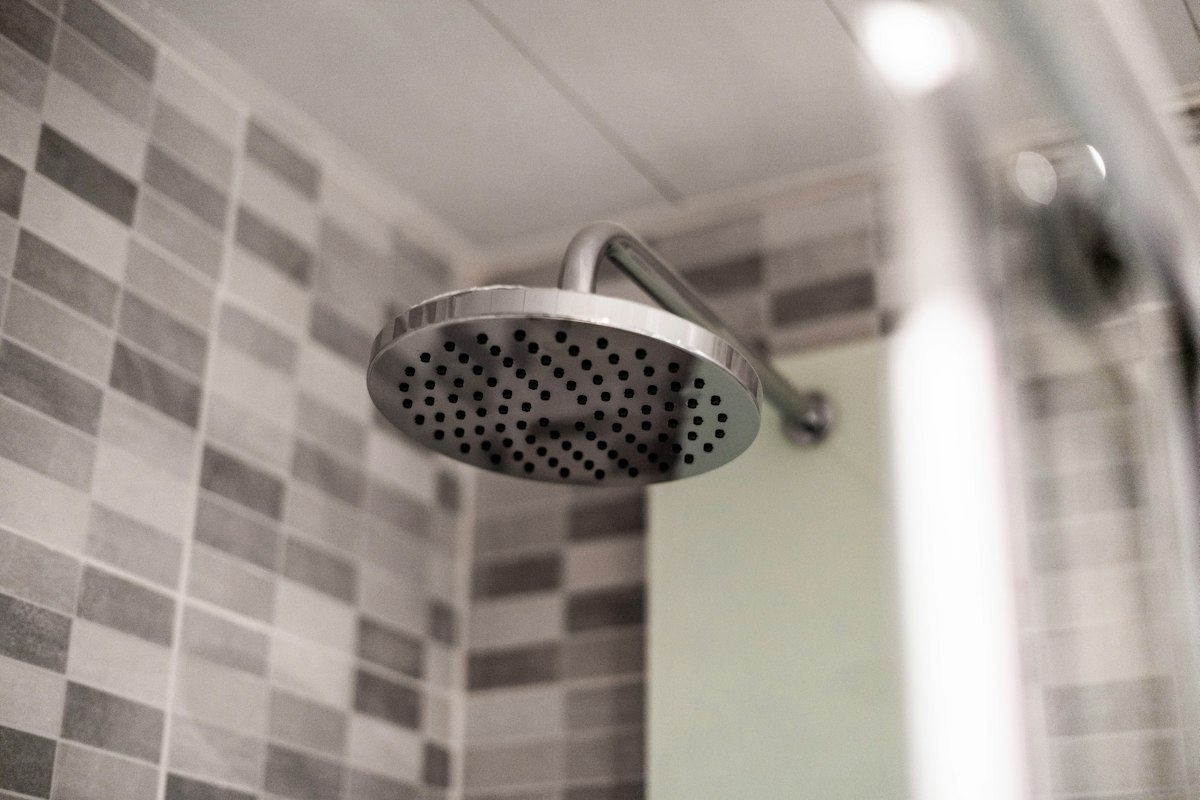
Modern showers can be simple or elaborate. A standard fixed showerhead is the most common. Handheld showerheads on a slide bar make bathing easier for children, older adults and anyone who sits to shower. Rain showerheads mount overhead for a wide, gentle spray. Body sprays and multi-head systems add jets on the walls and need a valve and supply lines sized to feed several outlets at once.
Federal rules limit showerhead flow, and WaterSense-labeled models use even less while meeting performance criteria. A multi-head system may need larger supply lines and a water heater that can keep up; ask your plumber to check before choosing one. Low flow from any showerhead is often mineral buildup, which soaking in vinegar removes.
Accessibility Upgrades
Shower and tub plumbing can be adapted for easier, safer use. Common upgrades include replacing a tub with a low-threshold or curbless shower, installing a handheld showerhead on an adjustable bar, moving the valve to where it can be reached from outside the spray, and adding a thermostatic valve to prevent scalds. Grab bars must be anchored into framing or with rated anchors. These changes are often made together during a remodel.
Tub and Shower Drains
Tub and shower drains clog more than most, because hair binds with soap scum in the trap just below the opening. A tub drain has two parts: the drain at the bottom of the tub and the overflow near the top, joined by a waste-and-overflow assembly behind the tub. The stopper may be a lift-and-turn, toe-touch, push-pull or trip-lever type, and each collects hair in a different place. Showers have a strainer over the drain, sometimes a linear drain along one wall. A hair catcher, regular cleaning of the stopper and a professional cleaning when water starts pooling keep these drains flowing. When a tub drain leaks, the gasket under the drain flange or at the overflow has usually failed, and both can be replaced, often through an access panel behind the tub.
What to Expect During a Shower Valve Replacement
When a valve body must be replaced, the plumber shuts off water to the house, opens access to the valve from behind the wall or through a small tile opening, cuts out the old valve and solders or connects the new one. The new valve is pressure-tested before the wall is closed, and the trim is fitted to match. Expect the bathroom to be out of use for part of a day. If tile must be cut, ask whether spare tiles exist, since matching old tile can be difficult; an access panel from an adjoining closet or room is often the neatest option.
Questions to Ask Your Plumber
- 1
What type of valve do I have? It decides the repair.
- 2
Does my valve meet current anti-scald standards? Ask whether replacement is recommended.
- 3
Where exactly is the leak coming from? Ask how it was confirmed.
- 4
Will the wall need opening? Ask about access panels.
- 5
What permit is needed? For valve replacement and conversions.
Shower and Tub FAQs
Why does my shower turn hot or cold when someone flushes?
Your shower valve may not have pressure balancing, or its balancing cartridge is worn. A pressure-balancing or thermostatic valve keeps the temperature steady.
Why does my showerhead keep dripping?
A dripping showerhead usually has a worn cartridge or washer inside the shower valve. Replacing the worn part stops the drip.
Can a shower valve be replaced without removing tile?
Often, yes. Many valves can be serviced through the handle opening, and some replacements use an access panel from the other side of the wall. Larger valve changes may need a small tile opening.
Can you convert my tub into a walk-in shower?
Yes. A conversion involves the valve, drain, shower pan and waterproofing, and is usually done with a contractor handling tile and finishes.
Why does water leak through the ceiling below my bathroom?
The most common sources are a failed shower pan, a leaking drain or overflow, a leaking valve, or worn grout and caulk. Testing each source finds the cause.
Related Plumbing Services
Showers and tubs connect to several services. Slow drains are handled through clogged drain repair, hidden leaks through leak detection, and low flow through water pressure repair. Conversions and new fixtures are part of kitchen and bathroom plumbing.