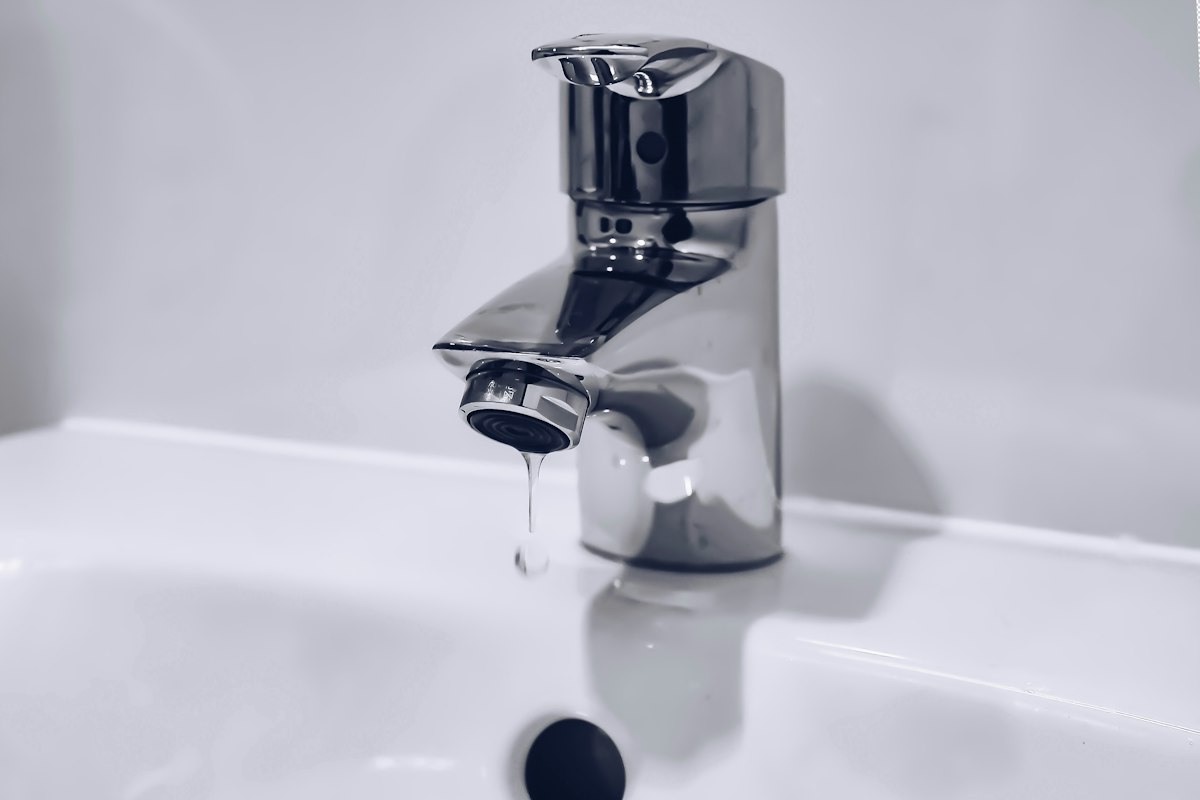
What Is Faucet and Sink Repair?
Faucet and sink repair is the fixing, replacement and installation of the fixtures where water is used in kitchens, bathrooms, laundry rooms and other spaces. It covers dripping and leaking faucets, worn cartridges and valves, loose handles, low flow, leaking sink drains and traps, cracked or failing sinks, and the installation of new faucets, sinks and related fixtures such as pot fillers, bar sinks, utility sinks and outdoor faucets.
A faucet is a valve that mixes and controls hot and cold water, and most faucet problems come from small internal parts: cartridges, washers, O-rings and seals that wear with use and with minerals in the water. A sink is the basin, with a drain assembly and a trap below it. Leaks can come from either half, and from the supply lines and shut-off valves that connect the faucet to the plumbing.
Many faucet and sink problems are quick repairs. Others, such as a corroded faucet body or a cracked sink, are better solved with replacement, which is also the time to upgrade to a fixture that saves water and suits the space.
Signs You Need Faucet or Sink Repair
- Dripping faucet: water drips from the spout when the faucet is off.
- Leaking at the handle or base: water seeps around the handle or pools at the faucet base.
- Stiff or loose handle: hard to turn, wobbly or not returning to off.
- Low flow: water trickles from the spout or sprayer.
- Temperature trouble: hard to set a steady mix of hot and cold.
- Leak under the sink: damp cabinet floor or drips from the trap or supply lines.
- Slow sink drain: buildup in the drain or trap.
- Noisy faucet: squealing or chattering when the faucet runs.
- Cracked or chipped sink: damage that leaks or cannot be cleaned.
Types of Faucets and How They Fail
Faucets work in one of four ways, and the type decides the repair. The table below explains each.
| Faucet type | How to recognize it | What wears out | Typical repair |
|---|---|---|---|
| Compression | Two handles that tighten down to close | Rubber washers and seats | Replace washers and seats |
| Cartridge | One or two handles that move smoothly | The cartridge and O-rings | Replace the cartridge |
| Ball | One handle on a rounded ball cap | Seals, springs and O-rings | Replace the ball kit |
| Ceramic disc | One lever over a wide cylinder | Seals; discs are durable | Replace seals or the cartridge |
Most modern single-handle faucets use cartridges or ceramic discs. Taking the old cartridge to the supply house, or knowing the faucet brand and model, makes repairs faster.
Common Faucet and Sink Problems and Their Fixes
| Problem | Usual cause | Typical repair |
|---|---|---|
| Drip from the spout | Worn cartridge, washer or seat | Replace the worn part |
| Leak at the handle | Worn O-rings or packing | Replace O-rings or cartridge |
| Low flow | Clogged aerator or sprayer, or a partly closed valve | Clean the aerator; open the valve |
| Sprayer weak or leaking | Clogged head, worn hose or diverter | Clean or replace the sprayer parts |
| Leak under the sink | Loose slip nut, worn washer, failed supply line | Tighten or replace the trap part or supply line |
| Leaking drain basket | Failed putty or gasket | Reseal the strainer basket |
| Slow drain | Hair, soap or food buildup | Clean the trap and drain; see drain cleaning |
| Wobbly faucet | Loose mounting nut | Tighten from below |
| Corroded faucet body | Age and minerals | Replace the faucet |
How a Plumber Repairs a Faucet
A faucet repair follows five steps.
- 1
Shut off the water: the valves under the sink are closed and the faucet opened to relieve pressure.
- 2
Disassemble: the handle and trim are removed to reach the cartridge, stem or ball.
- 3
Identify and replace parts: worn parts are matched to the brand and model and replaced.
- 4
Clean and reassemble: mineral buildup is cleaned from the valve body and aerator.
- 5
Test: the water is restored and the faucet checked for drips, leaks and smooth operation.
If the shut-off valves under the sink will not close or leak when turned, they are replaced at the same time; see shut-off valve replacement.
Installing a New Faucet or Sink
A new faucet or sink installation follows six steps.
- 1
Check the fit: the number of holes in the sink or counter, the spout reach and height, and the space under the sink.
- 2
Shut off and disconnect: water is turned off and the old faucet, supply lines and drain are removed.
- 3
Install the new fixture: the faucet is mounted, and for a new sink, the sink is set and sealed.
- 4
Connect supply lines: new braided supply lines are connected to the shut-off valves.
- 5
Connect the drain: the drain assembly, tailpiece and trap are fitted, plus the dishwasher or disposal connection in a kitchen.
- 6
Test: the plumber checks every connection under full pressure and runs water through the drain.
We are happy to install homeowner-supplied faucets and sinks. Bring the box and instructions to the visit, since many faucets need model-specific parts.
Choosing a Faucet
The table below lists the features to compare when choosing a new faucet.
| Feature | What to consider |
|---|---|
| Handle style | Single lever is easy to use; two handles give finer control |
| Spout | Height and reach should suit the sink and pots |
| Pull-down or pull-out sprayer | Useful in kitchens |
| Valve type | Ceramic disc valves are durable |
| Flow rate | WaterSense-labeled bathroom faucets use less water |
| Finish | Some finishes resist fingerprints and spotting |
| Mounting holes | Must match the sink or counter, or use a deck plate |
| Touch or touchless | Need batteries or power |
Sink Types
| Sink type | Description | Plumbing notes |
|---|---|---|
| Drop-in | Rim sits on top of the counter | Easiest to replace |
| Undermount | Mounted under the counter | Needs secure clips and sealant |
| Farmhouse (apron front) | Deep basin with an exposed front | Often needs custom cabinet work |
| Vessel | Bowl sits on the counter | Needs a taller faucet or wall-mount faucet |
| Pedestal | Basin on a stand | Exposed plumbing should be neat |
| Utility | Deep laundry or garage sink | Durable; sometimes needs a pump for basement drains |
What Affects the Cost of Faucet and Sink Work?
| Factor | Effect on cost |
|---|---|
| Repair vs. replacement | A cartridge costs less than a new faucet |
| Fixture supplied by you or the plumber | Affects the total |
| Sink replacement | Counter type and mounting affect labor |
| Valve and supply line replacement | Inexpensive, often recommended |
| Disposal or dishwasher connections | Add time in kitchens |
| Access | Tight vanities and corroded nuts take longer |
How Long Do Faucet and Sink Repairs Take?
A faucet repair usually takes 30 minutes to an hour. Replacing a faucet takes about one to two hours. Replacing a sink takes longer, depending on the counter and mounting, especially for undermount sinks that need time for sealant to cure.
Hard Water and Your Fixtures
Hard water leaves mineral deposits that clog aerators, wear cartridges and leave white crust on faucets and sinks. Homes with hard water often see faucets drip and lose flow sooner. Cleaning aerators regularly helps, and treating the water protects every fixture in the home; see water softener installation.
Maintaining Faucets and Sinks
- Clean aerators every few months: soak them in vinegar to dissolve minerals.
- Fix drips promptly: a small drip wastes water and wears the valve seat.
- Do not overtighten handles: it wears washers and cartridges faster.
- Check under sinks: look for damp or swollen cabinet floors every few months.
- Replace supply lines: braided lines last longer than old plastic or rubber lines.
- Use strainers: keep hair and food out of sink drains.
Kitchen Sink Plumbing
The kitchen sink carries more connections than any other sink. Beneath it, a plumber may find the faucet supply lines, a dishwasher supply and drain, a garbage disposal, an air gap or high loop for the dishwasher drain, a water filter or reverse osmosis system, and an ice maker line. Each connection is a possible leak point. When a kitchen sink or faucet is replaced, it is the right time to replace aging supply lines and valves, check the dishwasher drain connection, and make sure the trap is sound. Kitchen disposals are covered in detail on our garbage disposal repair page.
Bathroom Sink Plumbing
Bathroom sinks are simpler, but they have their own weak points. The pop-up drain stopper and its linkage collect hair and soap, which slows drainage. The overflow opening near the top of the basin can trap smelly buildup. Vanity cabinets hide supply lines that can leak for weeks before anyone notices the swollen cabinet floor. Pulling and cleaning the stopper every month, and checking under the vanity, prevents most problems.
Outdoor Faucets and Specialty Fixtures
Fixtures outside the kitchen and bathroom need care too. Outdoor faucets, or hose bibs, should be frost-free in cold climates and fitted with a vacuum breaker to prevent backflow. Laundry and utility sinks often sit in basements where a small pump may be needed to lift water to the drain. Pot fillers over the range need a supply line run inside the wall, and bar sinks need a drain and vent like any other sink. Each of these is installed to the same code standards as a main fixture.
Drain Assemblies and Traps
Every sink has a drain assembly that carries water from the basin into the trap below. The trap is the curved section of pipe, usually a P-trap, that holds a small amount of water to block sewer gases from entering the room. Slip nuts and washers join the trap to the tailpiece above and the drain arm in the wall. These joints loosen over time and are the most common source of under-sink drips. Old metal traps corrode from the inside; modern plastic traps resist corrosion and are easy to service. When a sink drains slowly, cleaning the trap often solves it, and when a trap leaks after being disturbed, replacing it is usually quicker than trying to reseal old parts.
A trap that dries out, such as in a seldom-used guest bathroom, lets sewer odor into the room. Running water in every sink once a week keeps the trap sealed. If the smell persists, the vent serving that sink may be blocked.
Questions to Ask Your Plumber
- 1
Can this faucet be repaired, or should it be replaced? Ask about parts availability.
- 2
Will you replace the shut-off valves and supply lines? Often overdue on older fixtures.
- 3
Is my new faucet compatible with my sink? Check holes, reach and valve type.
- 4
Do I need a new drain assembly? Old drains often leak once disturbed.
- 5
What warranty comes with the fixture and labor? Faucet makers often offer long warranties on parts.
Faucet and Sink FAQs
How much water does a dripping faucet waste?
A faucet dripping once per second wastes over 3,000 gallons a year, according to the EPA's WaterSense program.
Is it better to repair or replace a faucet?
Repair a faucet when parts are available and the body is sound. Replace it when the body is corroded, parts are hard to find, or you want a different style or better water efficiency.
Why is my faucet water pressure low?
Low pressure at one faucet is usually a clogged aerator, a worn cartridge or a partly closed shut-off valve. Low pressure at every fixture points to a household problem; see water pressure repair.
Can I install a faucet I bought myself?
Yes. Plumbers routinely install homeowner-supplied faucets and sinks. Keep the box and instructions for the visit.
Why does the cabinet under my sink smell?
A smell under the sink can come from a slow leak, a dry or dirty trap, or a drain problem. A plumber can check for leaks and clean or replace the trap.
Related Plumbing Services
Sinks and faucets connect to several services. Kitchen sinks often include a disposal, covered under garbage disposal repair. Slow sink drains need drain cleaning, and under-sink valves are replaced through shut-off valve replacement. Larger upgrades are part of kitchen and bathroom plumbing.