What Is Main Water Line Repair?
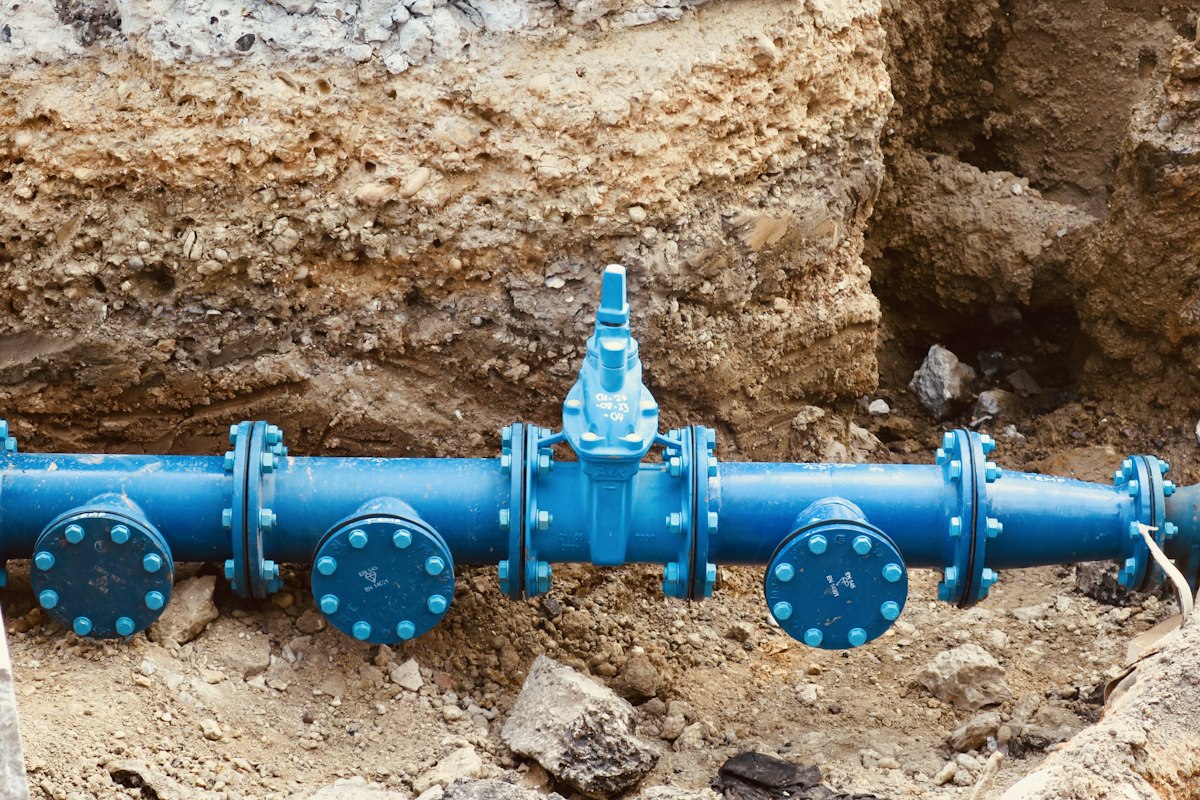
Main water line repair is the fixing or replacement of the buried pipe that carries fresh water from the water meter to a home. This pipe, often called the water service line, runs underground from the meter box near the street to the point where water enters the house, usually through the foundation or slab near the main shut-off valve. It is under constant pressure from the city supply, so a break or leak in it loses water around the clock, even when nothing in the house is running.
A plumber diagnoses the problem with a meter test and pressure test, locates the line and the leak with electronic equipment, and then repairs the damaged section or replaces the whole line. Replacement can be done in an open trench or with trenchless methods that pull new pipe through the ground with minimal digging.
The main water line is different from the main sewer line, which carries waste water away from the home. Sewer problems are covered on our sewer line repair page.
Signs of a Main Water Line Problem
The signs below point to a problem in the water service line rather than inside the house.
- Wet or soggy areas in the yard: a damp patch or standing water between the street and the house.
- Unusually green grass: a strip of lush grass along the line's path.
- Water meter moving with the house shut off: the leak is between the meter and the house.
- Sudden drop in water pressure: water is escaping before it reaches the home.
- Discolored or dirty water: a break can draw soil into the line.
- Rising water bills: water lost underground is still metered.
- Hissing or running sounds: near the meter or where the line enters the home.
- Sinkholes or depressions: soil washing away above a leak.
Who Is Responsible for the Water Line?
Responsibility for the water service line usually splits at the meter. The utility usually owns the meter and the pipe on the street side. The homeowner usually owns the line from the meter to the house, and is responsible for repairing it. Rules vary between cities and utilities, so check with your water provider if the leak is close to the meter.
What Causes Water Line Damage?
The table below lists the common causes of water service line failure.
| Cause | How it damages the line |
|---|---|
| Age and corrosion | Galvanized steel rusts through; old copper develops pinholes |
| Lead pipe | Older service lines may be lead, which is replaced for health reasons |
| Ground movement | Settling, freeze-thaw cycles and expansive soils stress the pipe |
| Tree roots | Roots wrap around and crack buried pipes |
| Freezing | Shallow lines can freeze and split |
| High water pressure | Stresses joints and weak points |
| Construction damage | Digging, fencing or landscaping can strike the line |
| Poor installation | Bad joints, sharp rocks against the pipe, too-shallow burial |
Lead Service Lines
Some older homes still have a lead water service line, or galvanized pipe that was once connected to lead. Lead can leach into drinking water, especially when water sits in the pipe. Federal rules now require utilities to identify and replace lead service lines over time, and many utilities run replacement programs that cover part of the cost.
If your home was built before the late 1980s and you are unsure what your service line is made of, a plumber can check the pipe where it enters the home. Lead pipe is dull gray, soft enough to scratch easily with a key, and does not attract a magnet. Contact your water utility about lead service line programs, and consider water filtration systems certified for lead reduction while you wait for replacement.
How a Plumber Repairs a Main Water Line
Main water line work follows six steps.
- 1
Confirm the leak: a meter test with the house valve closed confirms the leak is in the service line.
- 2
Locate the line and leak: an electronic locator traces the pipe route; acoustic equipment pinpoints the leak.
- 3
Call for utility marking: buried utilities are marked before any digging, usually through 811.
- 4
Choose the repair: a spot repair for one break in a sound line, or replacement for an old or failing line.
- 5
Make the repair: the plumber excavates and repairs the section, or installs a new line by trench or trenchless method.
- 6
Test and restore: the line is pressure-tested, flushed and inspected before backfilling.
Repair Methods Compared
The table below compares the ways a water service line can be repaired or replaced.
| Method | What it involves | Best for |
|---|---|---|
| Spot repair | Digging at the leak and replacing a short section | One leak in an otherwise sound line |
| Open-trench replacement | Digging a trench along the line and laying new pipe | Short runs, open yards, or where rerouting is needed |
| Directional boring | Drilling a path underground and pulling new pipe through | Lines under driveways, walkways and landscaping |
| Pipe pulling or bursting | Pulling new pipe through the path of the old one | Replacing old lines with minimal digging |
Trenchless replacement methods work much like those used for sewers; see trenchless sewer repair for how they protect lawns and hardscape.
Water Line Materials
New water service lines are usually one of the materials below.
| Material | Notes |
|---|---|
| Copper (Type K) | Durable, long-proven, more costly |
| PEX | Flexible, resists freezing, installs easily by trench or boring |
| HDPE (polyethylene) | Flexible, joint-free in long lengths, common for trenchless installs |
| PVC | Used in some areas; less flexible |
Local codes decide which materials are allowed, and sometimes the minimum depth and size.
What Affects the Cost of Water Line Repair?
The factors below drive the cost.
| Factor | Effect on cost |
|---|---|
| Repair or replacement | A spot repair costs less than a new line |
| Length of the line | Longer lines need more pipe and labor |
| Depth | Deeper lines, required in colder climates, mean more digging |
| Method | Trench and trenchless methods differ in equipment and restoration |
| What sits above the line | Driveways, walkways and landscaping raise open-trench costs |
| Permits | Most service line work needs a permit and inspection |
| Utility involvement | Work near the meter may need the utility to shut off or replace parts |
How Long Does Water Line Repair Take?
A spot repair usually takes a few hours to a day. A full replacement often takes one to two days, depending on length, method and soil. Permits, utility marking and inspection can add time before and after. Water to the home is off while the line is being connected.
What to Expect on Repair Day
The plumber marks the work area and confirms utility locations before digging. Water to the house is shut off at the meter while the line is open, so fill a few containers with drinking water beforehand. After the repair, the plumber flushes the line to clear air and debris, which can make water cloudy or sputtery for a short time. Run cold taps for a few minutes to clear any remaining air.
Preventing Water Line Problems
- Keep pressure in range: a pressure regulator protects the line and the home; see water pressure repair.
- Plant trees away from the line: roots crack buried pipe.
- Call 811 before digging: protects the line from fence posts and landscaping.
- Check your meter twice a year: catch underground leaks early.
- Know your pipe material: plan replacement for galvanized or lead lines.
Water Line Size and Water Pressure
The size of the water service line affects how much water reaches the house. Many older homes have a 3/4-inch line, while homes with more bathrooms, irrigation or fire sprinklers may need a 1-inch line or larger. An undersized line causes pressure to drop when several fixtures run at once. Old galvanized lines also narrow inside as they rust, reducing flow even further.
When a service line is replaced, the plumber checks the home's demand and may recommend a larger line. A pressure regulator, also called a pressure-reducing valve, is usually installed or replaced where the line enters the home so the pressure inside stays in a safe range.
Burial Depth and Freezing
Water service lines must be buried below the frost line, the depth to which the ground freezes in winter. Frost depth varies widely across the US, from a few inches in the far South to several feet in northern states, and local codes set the minimum. A line buried too shallow can freeze and split, especially where it rises toward the house or meter. When a service line is replaced, it is laid at the depth local code requires.
Is the Leak on the City Side?
Some leaks sit on the utility's side of the meter. Signs include water pooling at the meter box or in the street, a leak that continues when the valve at the meter is closed, or water coming up between the meter and the main. If you suspect a city-side leak, contact your water utility first; they will repair their side at no cost to you.
Water Quality After a Water Line Repair
After any work on the service line, water may look cloudy, sputter from taps or carry a little sediment for a short time. Cloudiness is usually tiny air bubbles that clear within a minute in a glass. Sediment comes from disturbed pipe and clears after flushing. The plumber flushes the line at an outside faucet before restoring full use, and you can run each cold tap for a few minutes afterward. Clean faucet aerators if flow seems reduced. If discoloration lasts more than a day, ask the plumber to check the line again.
Water Line Repair Before Selling or Buying a Home
An old or leaking service line can come up during a home sale. Buyers' inspectors often note galvanized or lead service pipe where it enters the house, and some lenders and buyers ask for it to be addressed. Sellers who replace the line before listing remove an objection and a negotiating point. Buyers of older homes should ask what the service line is made of and whether the utility has records of a lead line on that property. A plumbing inspection identifies the service line material where it enters the home.
Questions to Ask Your Plumber
- 1
Is the leak on my side of the meter? Responsibility usually depends on it.
- 2
Should I repair or replace the whole line? Ask about the age and material of the rest of the line.
- 3
Can the line be replaced without trenching? Ask about boring or pulling options.
- 4
What material will you use, and how deep? It should meet local code.
- 5
Is a pressure regulator needed? High pressure shortens the life of the new line and the home's plumbing.
Main Water Line FAQs
How do I know if my main water line is leaking?
Close the main shut-off valve inside the house and watch the water meter. If the meter still moves, water is leaking between the meter and the house.
Can a water line be replaced without digging up the yard?
Often, yes. Directional boring and pipe pulling replace a water line with small access pits, protecting lawns, driveways and walkways.
Is a leaking water line an emergency?
A large leak, a sinkhole, or loss of water to the home needs prompt attention; call our 24-hour emergency plumbing line. A small leak found by a meter test should still be repaired quickly.
Does homeowners insurance cover a water line?
Many standard policies exclude underground service lines. Some insurers and utilities offer separate service line coverage.
How long does a new water line last?
A new copper, PEX or HDPE service line is designed to last for decades when installed correctly at the right depth.
Related Plumbing Services
The main water line connects to several services. Underground leaks are pinpointed with leak detection. Pressure problems are handled through water pressure repair, and the valve where the line enters the house is covered under shut-off valve replacement. Replacing the line is often a good time to plan whole-house repiping.