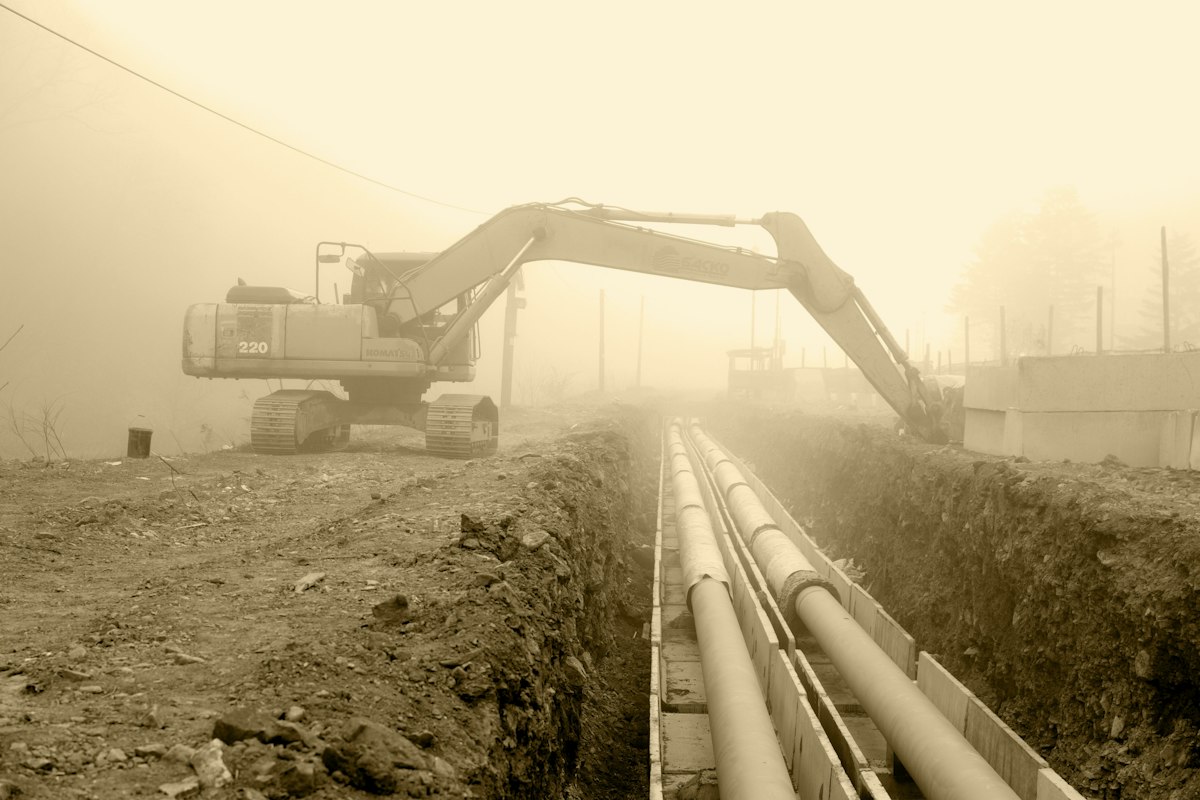
What Is Trenchless Sewer Repair?
Trenchless sewer repair is a group of methods that repair or replace an underground sewer line without digging a trench along its full length. Instead of excavating the whole pipe, a plumber works through one or two small access points, such as an existing cleanout or a pit at each end of the line. The two main trenchless methods are pipe lining, which builds a new pipe inside the old one, and pipe bursting, which pulls a new pipe through the path of the old one while breaking the old pipe apart.
The benefit is what stays untouched above the pipe. Driveways, patios, walkways, mature trees, gardens and lawns remain in place. The work is usually faster than open-trench replacement, and restoration costs are much lower.
Trenchless repair is one of the options covered under sewer line repair. It suits most damaged lines, but not all, so a camera inspection decides whether it is the right choice.
When Is Trenchless Repair the Right Choice?
Trenchless repair is the right choice when the pipe still holds its general shape and alignment, and when digging would be costly or disruptive. The situations below favor trenchless methods.
- The line runs under hardscape: a driveway, patio, deck or walkway sits over the pipe.
- Mature landscaping: trees, gardens or established lawns would be destroyed by a trench.
- Roots and cracks along the line: lining seals the joints roots enter through.
- Corroded cast iron: a liner creates a smooth new wall inside a rough, thinning pipe.
- Undersized pipe: pipe bursting can install a larger pipe in the same path.
- Deep lines: the deeper the pipe, the more a trench costs, and the more trenchless saves.
When Trenchless Repair Is Not Suitable
Trenchless methods have limits. The conditions below usually rule out lining, and sometimes bursting.
| Condition | Why it is a problem | Usual alternative |
|---|---|---|
| Fully collapsed pipe | A liner needs a path; a collapse blocks it | Spot excavation at the collapse, then lining or bursting |
| Severe belly (sag) | A liner follows the sag, so waste still settles there | Open-trench repair of the sagging section |
| Wrong slope | Lining cannot change the grade of the pipe | Open-trench replacement |
| Many tight bends | Bends make lining or bursting difficult | Sectional repair or open trench |
| Rerouting needed | Trenchless follows the existing path | Open trench along the new route |
A plumber confirms these conditions with a camera before quoting a trenchless job.
Pipe Lining vs. Pipe Bursting
The two trenchless methods work in different ways and suit different pipes.
| Attribute | Pipe lining (CIPP) | Pipe bursting |
|---|---|---|
| What it does | Creates a new pipe inside the old one | Breaks the old pipe and pulls a new pipe into its place |
| New pipe material | Resin-saturated felt or fiberglass liner, cured hard | Usually high-density polyethylene (HDPE) |
| Pipe diameter after | Slightly smaller than the original | Same size or larger |
| Access needed | Often one access point, sometimes two | Two pits, one at each end |
| Best for | Cracks, roots and joint leaks in a pipe that keeps its shape | Badly deteriorated or undersized pipe |
| Old pipe | Stays in the ground as a host pipe | Fractured and pushed into surrounding soil |
| Joints in new pipe | Seamless along the lined length | Fused, joint-free lengths |
Cured-in-place pipe is usually called CIPP. The liner is soaked in resin, pulled or inverted into the old pipe, and cured with hot water, steam or UV light until it hardens into a new pipe.
How Trenchless Pipe Lining Works
Pipe lining follows six steps from start to finish.
- 1
Camera inspection and measurement: the plumber records the line's condition, length, diameter and any connections.
- 2
Cleaning: the pipe is cleaned to bare wall with hydro jetting and root cutting, so the liner can bond.
- 3
Liner preparation: a liner cut to length is saturated with resin, a process called wetting out.
- 4
Installation: the liner is inverted or pulled into the pipe and pressed against the old wall with an inflatable bladder or air pressure.
- 5
Curing: heat, steam or UV light hardens the resin into a rigid new pipe.
- 6
Reinstatement and final inspection: any branch connections are reopened with a robotic cutter, and the new pipe is checked on camera.
How Pipe Bursting Works
Pipe bursting follows five steps.
- 1
Dig two access pits: one at the start of the line and one at the end.
- 2
Feed a cable: a steel cable is threaded through the old pipe from one pit to the other.
- 3
Attach the bursting head: a cone-shaped head is fixed to the new pipe and connected to the cable.
- 4
Pull the new pipe through: a hydraulic machine pulls the head through the old pipe, breaking it outward while the new pipe follows.
- 5
Connect and test: the new pipe is joined to the house and city connections, tested and inspected before the pits are closed.
What Affects the Cost of Trenchless Sewer Repair?
The price of trenchless repair depends on the line and the method. The factors below are the main ones.
| Factor | Effect on price |
|---|---|
| Length of line | Liner and pipe are priced by length |
| Diameter | Larger pipes need more material |
| Method | Lining and bursting differ in equipment and labor |
| Access | An existing cleanout saves digging an access pit |
| Branch connections | Each connection reopened inside a liner adds time |
| Cleaning required | Heavy roots or scale add jetting time |
| Permits | Most sewer work needs a permit and inspection |
| Restoration avoided | Less concrete and landscape repair than a trench |
The pipe work itself can cost as much as, or more than, open-trench pipe work. The savings usually come from what is not dug up and then replaced. A plumber should quote both options when both are possible, so you can compare the full cost.
How Long Does Trenchless Repair Take?
Most residential trenchless sewer repairs are finished in one day, and many in a few hours of active work. Lining needs curing time, which depends on the method used. Pipe bursting is often done in one day including the pits. Permits and inspections can add time before and after the work.
How Long Does a Trenchless Sewer Line Last?
A properly installed CIPP liner or HDPE pipe is designed to last for decades. Both create a jointless or near-jointless pipe that resists root entry, which is the main cause of failure in older clay lines. Lifespan depends on installation quality, ground conditions and what is sent down the drains.
Before and After a Trenchless Repair
The points below help a trenchless job go smoothly.
- Before: locate your cleanout and clear access to it; note where the line exits the house.
- Before: plan for limited water use during the work.
- During: the plumber marks utilities and protects the work area.
- After: ask for the final camera footage as a record of the new pipe.
- After: keep using good habits, since even a new pipe can clog with wipes and grease.
Trenchless vs. Open-Trench Replacement
The table below compares trenchless repair with traditional open-trench replacement across the attributes homeowners ask about most.
| Attribute | Trenchless (lining or bursting) | Open-trench replacement |
|---|---|---|
| Digging | One or two small access points | A trench along the whole line |
| Disruption to yard and hardscape | Minimal | Lawn, driveway or patio removed and replaced |
| Typical duration | Often one day | Often several days |
| Fixes sags and slope | No | Yes |
| Handles collapsed pipe | Only with spot excavation | Yes |
| Can change the route | No | Yes |
| Restoration cost | Low | Can be high under hardscape |
| Resulting pipe | Seamless liner or fused HDPE | New PVC or other approved pipe |
Neither method is always better. The right choice depends on the condition of the pipe, what sits above it and the budget, which is why a camera inspection comes before any quote.
Is Your Home a Good Candidate for Trenchless Repair?
The checklist below gives a quick sense of whether trenchless repair is likely to suit your sewer line. A camera inspection gives the final answer.
- The camera shows the pipe still holds its shape along most of its length.
- The damage is cracks, root entry, corrosion or leaking joints rather than a full collapse.
- The line has a consistent slope without major sags.
- The line runs under a driveway, patio, trees or landscaping you want to keep.
- There is a cleanout or a practical place for an access pit at each end.
- The line does not need to move to a new route.
If most of these are true, trenchless repair is likely to be offered. If the camera shows a collapse or a serious sag, expect a combination: a small excavation at the problem spot, with lining or bursting for the rest of the line.
Trenchless Repair and Your Neighbors
Because trenchless work needs only small access points, it causes little disruption to neighbors, shared driveways and sidewalks. Where a sewer lateral crosses a public sidewalk or street, the city may still require permits and traffic control for any access pit, but the overall footprint is far smaller than a trench.
Questions to Ask a Trenchless Contractor
The six questions below help you compare trenchless quotes.
- 1
Which method do you recommend, and why? The answer should come from the camera footage.
- 2
Can I see the inspection video? You should see the defects the repair is meant to fix.
- 3
How will branch connections be handled? Lining requires connections to be reopened from inside.
- 4
What liner or pipe material will you use? Ask about the material and its rating.
- 5
Who handles the permit and inspection? The contractor should arrange both.
- 6
What warranty comes with the work? Ask what the warranty covers and for how long, in writing.
Trenchless Methods for Water Lines
Trenchless methods are not only for sewers. Water service lines, the pressurized pipes that bring fresh water from the meter to the house, can often be replaced with a directional bore or by pulling new pipe through the old path. This avoids trenching across a lawn or under a driveway. Replacing an old galvanized or lead water line this way is covered on our main water line repair page.
What Happens to the Old Pipe?
In pipe lining, the old pipe stays in the ground and acts as a host for the liner. In pipe bursting, the old pipe is broken into fragments and pushed into the surrounding soil as the new pipe takes its place. In both cases there is no old pipe to dig up and haul away, which is part of why trenchless work is cleaner and faster than a traditional replacement.
Trenchless Sewer Repair FAQs
Is trenchless sewer repair better than digging?
Trenchless repair is better when the pipe keeps its shape and the ground above holds things you want to keep. Open-trench repair is better for collapsed pipe, severe sags and lines that need a new route or slope.
Does lining make my sewer pipe smaller?
Lining reduces the inside diameter slightly because the liner sits inside the old pipe. The smooth surface of the liner usually keeps flow capacity close to the original.
Can roots grow through a pipe liner?
A cured liner has no joints for roots to enter along its length, which is why lining is a common fix for root problems. Roots can still affect unlined sections and connections.
Can a trenchless repair be done in winter?
Trenchless repairs are often possible in winter because little digging is needed. Frozen ground can still affect access pits and curing times.
Is trenchless repair allowed in my city?
Trenchless methods are widely accepted in the US, but permit requirements and approved methods vary. Your plumber handles the permit and inspection.
Related Plumbing Services
Trenchless repair works hand in hand with other sewer services. Diagnosis and other repair methods are explained on our sewer line repair page. Lines are cleaned before lining with hydro jetting, and routine main sewer line cleaning keeps the new pipe clear. Trenchless methods can also replace a buried supply pipe, covered on our main water line repair page.