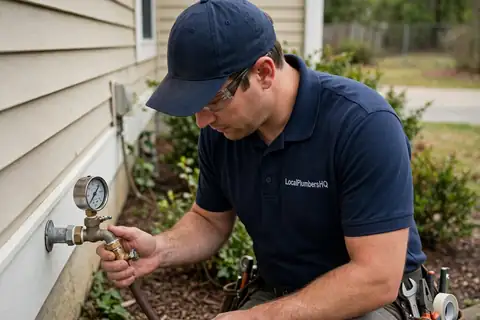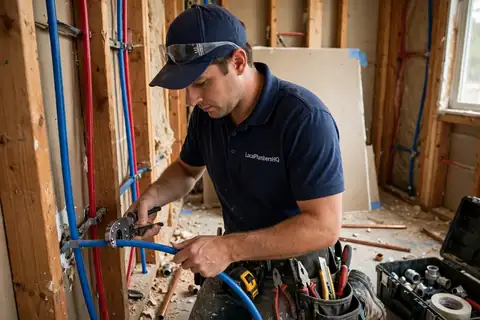
The Short Answer
PEX is flexible plastic pipe that costs less, installs faster with fewer joints, resists freezing and does not corrode. Copper is rigid metal pipe that is long-proven, handles heat and sunlight, resists pests, and is recyclable, but costs more and can corrode in aggressive water. Many plumbers use PEX for most water lines and copper where heat, exposure or rigidity matters.
PEX vs Copper at a Glance
| Attribute | PEX | Copper |
|---|---|---|
| What it is | Flexible cross-linked polyethylene tubing | Rigid or soft metal tubing |
| Material cost | Usually lower | Usually higher |
| Installation | Long runs with few fittings; crimp, clamp or expansion joints | Many fittings; joints usually soldered |
| Freeze resistance | Good: expands before it fails | Poor: splits when frozen |
| Corrosion | Does not corrode | Can corrode in acidic or aggressive water |
| Heat | Not for direct connection near very high heat sources | Handles high heat well |
| Sunlight (UV) | Degrades in sunlight; must be covered | Unaffected |
| Noise and water hammer | Quieter; flexible pipe absorbs shocks | Can transmit noise and hammer |
| Pests | Can be chewed by rodents | Resistant |
| Track record | In wide use for decades | Used for generations |
Which Is More Durable?
Both are durable when installed correctly. Copper has the longer track record and is unaffected by sunlight, heat and pests. PEX resists corrosion and freezing better, which are two of the most common causes of failure in copper. In homes with acidic or aggressive water, copper can develop pinhole leaks over time, while PEX is not affected by water chemistry in the same way. Repeated pinhole leaks are one of the main reasons homeowners consider whole-house repiping.
Which Handles Freezing Better?
PEX handles freezing much better. Its flexibility lets it expand as water freezes, so it is far less likely to split than rigid copper. That does not make PEX freeze-proof, so pipes in cold spaces still need insulation. If a frozen pipe does burst, follow the steps in our guide on what to do when a pipe bursts.
Which Is Easier to Install?
PEX is easier and faster to install. It comes in long coils that bend around corners, so a run from a manifold to a fixture can often be made with no joints in the wall. Copper needs a fitting at every change of direction, and each joint is soldered with a torch, which takes more time and skill. Fewer joints in PEX also means fewer places for leaks to start.
Does Pipe Material Affect Water Quality or Pressure?
Both materials are approved for drinking water when they meet the relevant standards. Some people notice a plastic taste in new PEX lines at first, which usually fades with use. On pressure, PEX's long, smooth runs with few fittings keep friction low, while each copper fitting adds a little resistance. In most homes either material delivers good pressure when sized correctly; low pressure usually has other causes, covered in our guide to causes of low water pressure.
Where Is Copper Still the Better Choice?
Copper is still preferred in several places, and many plumbers combine both materials.
- Near water heaters and boilers, where the first section of pipe may be exposed to high heat.
- Exposed outdoor runs, where sunlight would degrade PEX.
- Visible locations, such as exposed pipe at fixtures, where rigid pipe looks neater and stays in place.
- Homes with rodent problems, where chewing is a risk.
- Where local codes or the homeowner prefer it.
Which Should You Choose?
Choose PEX if you want a lower-cost, faster installation with fewer joints, live in a cold climate, or have water that corrodes copper.
Choose copper if the pipe will be exposed to sunlight or high heat, you have pest problems, you prefer a long-proven metal system, or local codes require it.
For a whole-house repipe, ask your plumber to explain which material they recommend for each part of the system, and why.
Related Comparisons
If you are planning a larger water heater upgrade at the same time, see tank vs tankless water heaters.
PEX vs Copper FAQs
Is PEX safe for drinking water?
PEX made to the relevant drinking water standards is approved for potable water in the United States. Look for pipe certified to those standards.
How long does PEX last?
PEX is designed for a long service life when installed correctly and protected from sunlight and excessive heat. Lifespan depends on installation, water conditions and temperature.
Can PEX and copper be connected?
Yes. Plumbers use approved transition fittings to join PEX and copper, which is common in partial repipes and around water heaters.
Is PEX allowed by building codes?
PEX is accepted by the major US plumbing codes, but local rules can add requirements. A licensed plumber will follow your local code.