The Short Answer
Water pressure is low because something is restricting or diverting the flow between the supply and your taps. If only one fixture is weak, the cause is usually a clogged aerator, showerhead or cartridge. If the whole house is affected, check the main shut-off valve, the pressure regulator, hidden leaks, old corroded pipes, or a problem with the city supply or well system.
Is It One Fixture or the Whole House?
Start by working out how widespread the problem is, because the answer points to different causes.
| Where pressure is low | Most likely causes |
|---|---|
| One faucet or showerhead | Clogged aerator or showerhead, worn cartridge, partly closed fixture valve |
| Hot water only | Water heater sediment, a partly closed heater valve, a failed dip tube |
| One bathroom or one floor | Corroded branch pipe, partly closed branch valve, height of upper floors |
| The whole house, suddenly | Main valve partly closed, failed pressure regulator, a burst or hidden leak, city supply work |
| The whole house, gradually | Corroded galvanized pipe, scale buildup, a failing regulator |
| Homes on a well | Pressure switch, pressure tank or pump problem |
How Do I Test My Water Pressure?
You can measure your home's water pressure with a simple gauge from a hardware store.
- 1
Turn off all water use in the house.
- 2
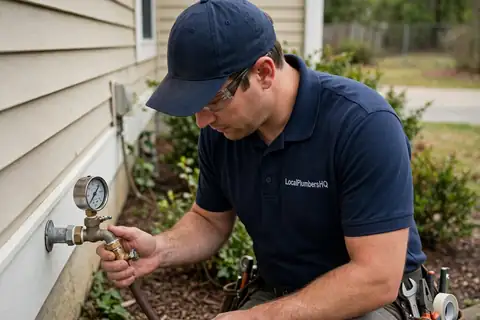
Screw the gauge onto an outdoor faucet or the washing machine's cold supply.
- 3
Open the faucet fully and read the gauge.
- 4
Compare the reading: most homes work best between about 40 and 80 PSI; below 40 feels weak, and above 80 is hard on fixtures.
If the gauge reads normally but a fixture is weak, the problem is at that fixture. If the gauge reads low, the problem is in the supply to the house.
What Causes Low Water Pressure?
The causes below are the ones plumbers find most often.
Clogged aerators and showerheads
Mineral deposits from hard water build up in faucet aerators and showerhead nozzles, narrowing the outlets. This is the most common cause of low pressure at a single fixture.
Partly closed valves
A main shut-off valve or fixture valve left partly closed after repairs restricts flow. Check that every valve on the line is fully open.
A failing pressure regulator
Many homes have a pressure-reducing valve where the water enters the house. When it wears out, it can stick and drop pressure throughout the home. Regulators are covered on our water pressure repair page.
Hidden leaks
Water escaping through a leak never reaches your fixtures. A sudden drop in pressure with a rising water bill suggests a leak; see leak detection.
Corroded pipes
Galvanized steel pipe, common in homes built before about 1970, rusts on the inside and narrows over time. The result is weak flow throughout the home and often discolored water. Replacing the old pipe is the lasting fix, explained under whole-house repiping.
City supply or well problems
Utility work, hydrant flushing or high demand can lower pressure for a whole street. Homes on private wells depend on a pump, pressure switch and tank, and a fault in any of them lowers pressure.
How Do I Fix Low Water Pressure?
Several fixes are simple enough to try yourself.
- Clean aerators and showerheads: unscrew them and soak them in white vinegar to dissolve mineral deposits.
- Open every valve fully: including the main shut-off and the valves under sinks.
- Check for leaks: turn off all water and watch the meter; if it moves, there is a leak.
- Ask your neighbors: if they have low pressure too, contact the water utility.
- Check the water heater valves if only hot water is weak.
Leave pressure regulator adjustment, pipe replacement and well equipment to a plumber.
When Should I Call a Plumber?
Call a plumber when the simple fixes do not help, or when the signs point to a bigger problem.
- Pressure dropped suddenly throughout the house.
- Your water meter moves with all water turned off.
- Water is discolored along with low pressure.
- You have galvanized pipe and pressure keeps getting worse.
- Only hot water is weak and the water heater is old.
- Your well system cycles on and off or loses pressure.
Can Water Pressure Be Too High?
Yes. Pressure above about 80 PSI is hard on plumbing. It wears out faucet cartridges, toilet fill valves and water heater parts faster, causes banging pipes, and can lead to leaks. A pressure-reducing valve sets the pressure to a safe level. If your water heater makes banging or knocking sounds, high pressure may be part of the cause, as explained in our guide to why a water heater makes noise.
Related Problems
Low pressure often shares a cause with other issues. A sudden loss of pressure together with water on the floor can mean a burst pipe, covered in what to do when a pipe bursts.
Low Water Pressure FAQs
What is normal water pressure for a house?
Most homes work well between about 40 and 80 PSI. Many plumbers aim for roughly 50 to 60 PSI as a comfortable middle.
Why is my water pressure low in only one bathroom?
Low pressure in one bathroom usually comes from that bathroom's fixtures or branch pipe: clogged aerators or showerheads, a partly closed valve, or a corroded pipe feeding that room.
Why did my water pressure suddenly drop?
A sudden drop can come from a failed pressure regulator, a burst or leaking pipe, a valve that was closed during work, or utility work on the street. Check with neighbors and your water meter first.
Does a water softener lower water pressure?
A correctly sized softener causes only a small pressure drop. An undersized or clogged unit can noticeably reduce pressure, so check the softener if pressure fell after it was installed.