The Short Answer
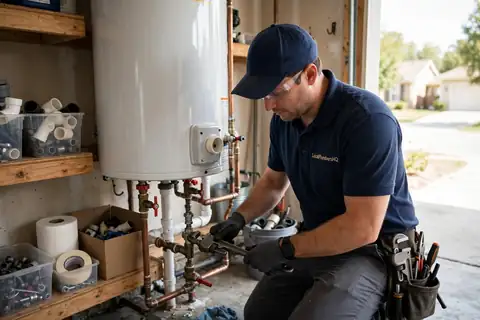
A tank water heater is cheaper to buy and install and simple to replace, but it can run out of hot water and loses some heat while it stands. A tankless water heater supplies continuous hot water within its flow rating, saves space and usually lasts longer, but costs more up front and needs correct sizing and yearly descaling. Choose tank for low upfront cost; choose tankless if you run out of hot water or plan to stay long term.
Tank vs Tankless at a Glance
The table below compares the two types across the attributes homeowners weigh most.
| Attribute | Tank water heater | Tankless water heater |
|---|---|---|
| How it heats | Keeps a stored tank of water hot | Heats water as it flows through |
| Hot water supply | Limited to the tank's capacity, then a recovery wait | Continuous within the unit's flow rating |
| Standby heat loss | Yes, the tank stays hot between uses | None |
| Typical lifespan | Around 8 to 12 years | Often 15 to 20 years or more with care |
| Upfront cost | Lower | Higher, often with gas line or electrical upgrades |
| Space | Large floor-standing tank | Compact, wall-mounted |
| Simultaneous use | Good until the tank runs low | Limited by the flow rating |
| Maintenance | Yearly flush | Yearly descaling, more with hard water |
| Replacement | Usually a straight swap | First install often needs venting and gas or power changes |
How Do Tank and Tankless Water Heaters Work?
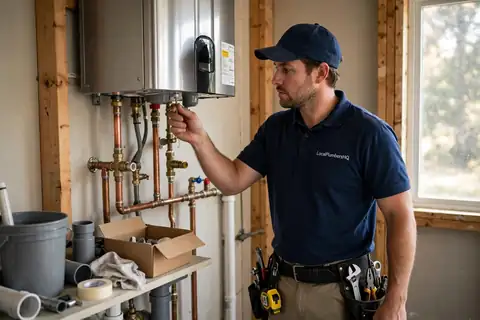
A tank water heater stores 30 to 80 gallons of water in an insulated tank and keeps it at a set temperature with a gas burner or electric elements. When you use hot water, cold water enters the tank and is heated back up. A tankless water heater has no storage. A flow sensor switches on a burner or elements when a hot tap opens, and water is heated as it passes through a heat exchanger. Our tankless water heater installation page explains sizing and installation in more detail.
Which Gives More Hot Water?
A tankless heater gives more total hot water, because it never runs out as long as demand stays within its flow rating. A tank heater can deliver a lot of hot water at once, but once the tank is used up, you wait for it to reheat. Families that run several showers back to back often prefer tankless. Homes that run many fixtures at the same moment need a tankless unit sized for that peak flow, or two units.
Which Is More Energy Efficient?
A tankless heater is generally more energy efficient, because it avoids standby heat loss: the energy a tank uses to keep stored water hot between uses. The difference is largest in homes that use less hot water overall. Efficiency for both types is shown on the EnergyGuide label as the Uniform Energy Factor (UEF); a higher UEF means more efficient. Heat pump tank heaters are a highly efficient electric option worth comparing too.
Which Lasts Longer?
Tankless heaters usually last longer. A tank's lifespan is limited by corrosion of the tank itself, and once it rusts through it must be replaced. A tankless unit has no tank to corrode, and many parts can be replaced, so it often lasts considerably longer with regular descaling. Hard water shortens the life of both types.
Which Costs More to Install?
Tank heaters cost less to install, especially as a like-for-like replacement. Switching from tank to tankless often adds work:
- Gas line upsizing: tankless gas units can need far more gas at full fire than a tank heater.
- New venting: gas tankless units need their own approved venting.
- Electrical upgrades: electric tankless units need large dedicated circuits.
- Relocation: pipes are rerouted to the new wall-mounted position.
Gas line work is explained under gas line repair. Ask for a quote that lists these items so you can compare the full cost.
What Maintenance Does Each Need?
A tank heater should be flushed about once a year to remove sediment, which also prevents the popping and rumbling explained in our guide to why a water heater makes noise. A tankless heater should be descaled about once a year by circulating a cleaning solution through its heat exchanger, more often where water is hard. Treating hard water helps both types.
Which Should You Choose?
The right choice depends on your household and plans.
Choose a tank water heater if:
- you want the lowest upfront cost;
- your current tank meets your hot water needs;
- you plan to move within a few years;
- your gas line, venting or electrical service would need costly upgrades for tankless.
Choose a tankless water heater if:
- your household runs out of hot water;
- you want to free up floor space;
- you plan to stay in the home long enough to benefit from the longer lifespan;
- you can keep up with yearly descaling.
If you are replacing a failed tank in an emergency, a like-for-like tank is usually the fastest fix; see water heater repair.
Related Comparisons
Planning a bigger plumbing upgrade? Choosing the right pipe material matters too; see PEX vs copper pipe.
Tank vs Tankless FAQs
Is tankless worth it for a small household?
A small household with modest hot water use may not save enough to justify the higher upfront cost. Tankless makes most sense when space or running out of hot water is the main concern.
Can a tankless water heater run a whole house?
Yes, if it is sized for the home's peak demand: the flow of all fixtures likely to run at once, at the temperature rise needed for your climate. Larger homes sometimes use two units.
Do tankless water heaters give instant hot water?
No. Water still has to travel through the pipes from the heater to the tap. A recirculation system shortens that wait.
Does hard water affect tankless heaters?
Yes. Scale builds up in the heat exchanger and reduces flow and efficiency, so yearly descaling or water treatment is important.