The Short Answer
A house smells like sewer when sewer gas escapes from the drain system into the living space. The most common causes are a dried-out drain trap, a blocked or broken plumbing vent, a failed toilet wax ring, a cracked drain pipe, or a problem in the main sewer line. If the smell is in one room, start with that room's drains; if it is everywhere, suspect the vent or main line.
What Is Sewer Gas?
Sewer gas is the mix of gases produced as waste breaks down in drains, sewer lines and septic tanks. It contains hydrogen sulfide, which gives the rotten-egg smell, along with methane and other gases. A home's drain system keeps sewer gas out using traps, the curved sections of pipe under every fixture that hold a plug of water, and vents, pipes that run up through the roof to carry gas outside and let drains flow smoothly.
A sewer smell indoors means one of these defenses has failed somewhere.
What Causes a Sewer Smell in the House?
The table below lists the common causes, where the smell usually appears and how to recognize each.
| Cause | Where you notice it | How to recognize it |
|---|---|---|
| Dry P-trap | Guest bathrooms, basement floor drains, unused sinks | The smell comes from a drain that is rarely used |
| Blocked or damaged vent | Several rooms, often worse when fixtures drain | Gurgling drains and slow drainage alongside the smell |
| Failed toilet wax ring | Around one toilet | Smell at the base, sometimes a wobbly toilet or stained floor |
| Loose or cracked drain pipe | A wall, ceiling or cabinet near plumbing | Smell is strongest in one spot, sometimes with damp |
| Clogged or dirty drain | Kitchen or bathroom sink | Smell from the drain opening, often with slow draining |
| Sewer line problem | Basement, lowest floor, or the whole house | Smell plus slow drains in several fixtures or backups |
| Septic system issue | Inside and outside the house | Smell in the yard, slow drains, a tank due for pumping |
How Do I Find Where the Smell Is Coming From?
You can narrow down the source with a few checks.
- 1
Note where the smell is strongest and whether it is in one room or many.
- 2
Run water into every drain you rarely use: guest sinks, tubs, showers and basement floor drains. A dry trap refilled this way usually stops the smell within an hour.
- 3
Check around each toilet base for odor, dampness or a toilet that rocks.
- 4
Listen for gurgling when sinks drain or toilets flush, a sign of venting problems.
- 5
Check under sinks for loose slip nuts, damp cabinet floors or a missing trap.
- 6
Note when it happens. A smell that appears after heavy rain or when the washer drains points toward the main line or venting.
How Do I Fix a Sewer Smell?
The fix depends on the cause. Some are simple and some need a plumber.
- Dry trap: pour water into the drain, then add a spoonful of mineral oil on top to slow evaporation in drains you rarely use.
- Dirty sink drain: clean the stopper and trap, and flush with hot water.
- Loose trap connection: hand-tighten the slip nuts under the sink.
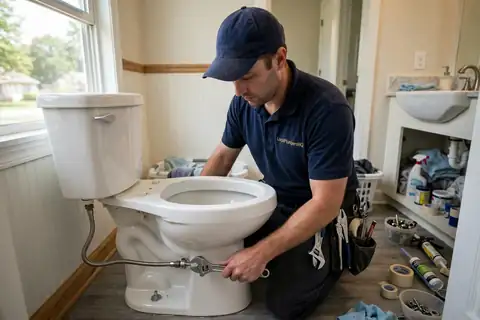
- Failed wax ring: the toilet must be lifted and reset on a new seal, which many homeowners leave to a plumber.
- Blocked vent: a plumber can clear the vent from the roof or replace damaged vent pipe.
- Cracked drain pipe: the damaged section must be found and replaced.
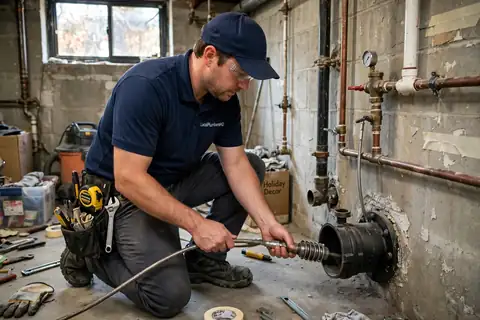
- Main line problem: a plumber clears the line and inspects it with a camera.
Main line blockages and backups are covered on our main sewer line cleaning page, and broken pipe is covered under sewer line repair.
Is Sewer Gas Dangerous?
Sewer gas in small amounts is mainly unpleasant, but it should not be ignored. Hydrogen sulfide can cause headaches, nausea and irritation, and higher concentrations are hazardous. Methane is flammable. A persistent smell also means the drain system is not sealed, so waste water may be leaking somewhere too. If the smell is strong, ventilate the home and have the plumbing checked promptly. If you smell gas that could be natural gas rather than sewer gas, leave the home and call your gas utility from outside.
When Should I Call a Plumber?
Call a plumber when the smell does not go away after refilling traps and cleaning drains, or when it comes with other warning signs.
- The smell is in several rooms or throughout the house.
- Drains gurgle or run slowly in more than one fixture.
- Sewage backs up into a tub, shower or floor drain.
- The smell is near a toilet base or comes with a damp floor.
- The smell returns after you have refilled the traps.
A camera inspection is the most reliable way to find cracks, root damage or separated joints that cannot be seen. It is part of a full plumbing inspection.
Related Problems
Sewer smells often appear alongside other plumbing issues. A toilet that runs or rocks may also be leaking at its seal, covered in our guide to why a toilet keeps running, and a burst or leaking pipe needs a different, faster response, explained in what to do when a pipe bursts.
Sewer Smell FAQs
Why does my bathroom smell like sewer only sometimes?
An intermittent sewer smell often comes from a trap that dries out between uses, a vent that struggles when several fixtures drain at once, or a smell that appears in certain weather. Note when it happens to help find the cause.
Why does my basement smell like sewer?
Basement floor drains are the most common source, because their traps dry out. Pour water into the floor drain. If the smell continues, the main line or a cleanout cap may be the cause.
Can a sewer smell come from the washing machine?
Yes. A washer standpipe without a proper trap, or a trap that has dried out, can let sewer gas in. The drain hose seal at the standpipe can also be the source.
Should I use air fresheners to cover the smell?
Air fresheners only mask the odor. Sewer gas means the drain system is open somewhere, so the cause should be found and fixed.